
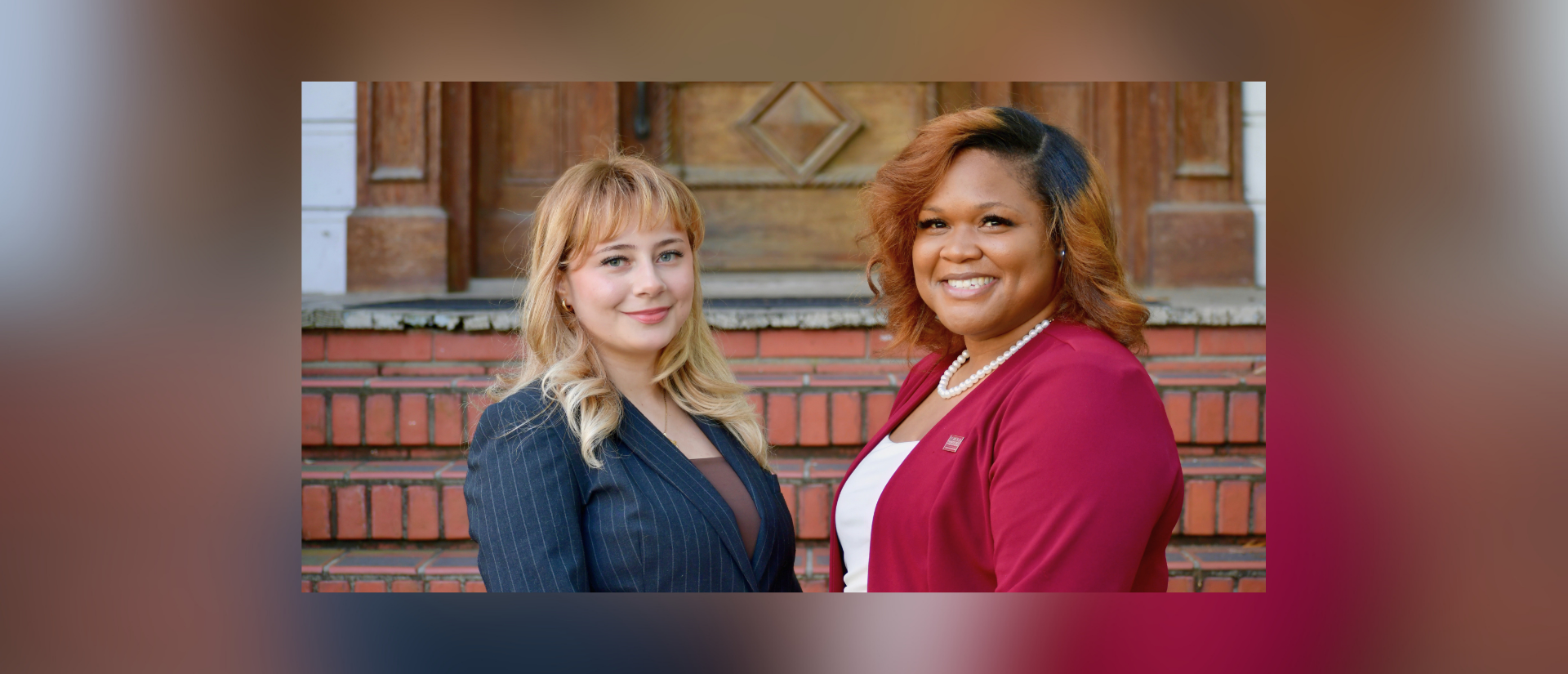
College of Law Announces 2026 Lemmon Environmental Law Fellows


Loyola University New Orleans College of Law’s Center on Environment, Land, and Law is excited to announce Amina Habib, JD ‘28, and Johnetta Bell, MA ‘26, as its 2026 Lemmon Environmental Law Fellows.
Fueled by the vision and generosity of Joan and Andrew Lemmon, JD ’87, this fellowship provides students with intensive internship opportunities in the environmental law field to bridge the gap between rigorous legal study and on-the-ground service.
Under the leadership of Professors Robert Verchick and Alessandra Jerolleman, JD '23, Lemmon Fellows spend the summer working with nonprofits or other local organizations who need help solving environmental-related legal issues. .
“The Lemmon Environmental Law Fellows program plays a key role in the growth of CELL,” Professor Verchick said. “Opportunities like this are what draw these students to Loyola. This is the kind of experience that changes lives and sets the foundation for fulfilling careers.”
Amina Habib
Originally from Bosnia and Herzegovina but a long-time Louisiana resident, Amina earned her B.A. in political science from Loyola in 2024 and began her JD in the fall of 2025. She’s driven by a mission to serve marginalized populations. For Amina, environmental law is the ultimate intersection of human rights and systemic change.
"I was particularly drawn to environmental law because it is a field wherein policymaking is directly connected to the protection and advancement of human rights and social justice," Amina said. "I am very grateful and excited for the opportunity to be a part of this fellowship."
Johnetta Bell
Johnetta is a recent graduate of Loyola’s Master of Environmental Law program. She is committed to using her lived experience to drive meaningful change and create pathways for others on the Gulf Coast and beyond.
“This summer, I’m most looking forward to deepening my understanding of how legal advocacy can drive meaningful change while also collaborating with others who are equally passionate about environmental justice,” Johnetta said. “I hope this experience will strengthen my ability to translate complex legal frameworks into accessible, actionable tools that empower communities and hold systems accountable.”
With a background in environmental science and biology from Delta State University, Johnetta is uniquely equipped to bridge the technical divide between science and regulatory policy. Her work focuses on holding systems accountable and ensuring that underserved communities have the tools to advocate for themselves.